Feature

Think Latin is a lost language? Think again.

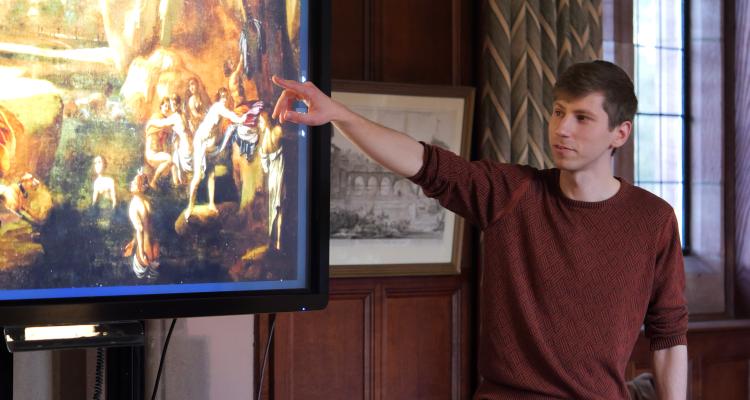
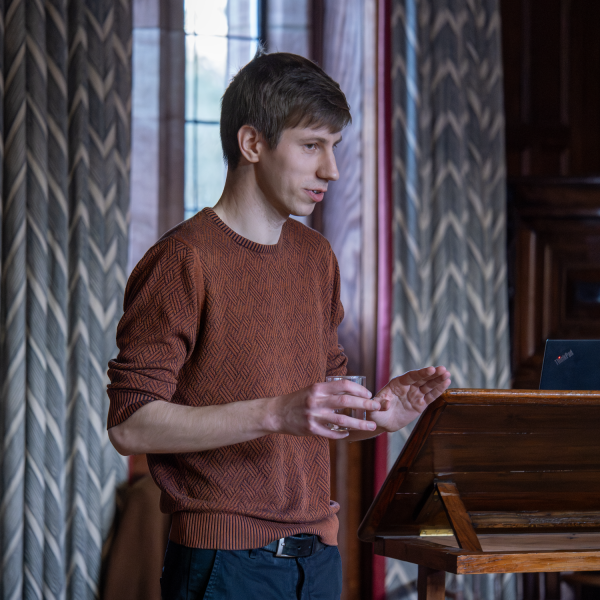
Ioan Zalevskyi running an Active Latin workshop at Girton College

Latin is the origin of words like justice, manual, video, and science. It's the language behind medicine, law, history. Learning Latin doesn't just teach you words, it trains your brain. From ancient Rome to modern classrooms, Latin connects you to 2,000 years of ideas, stories, and power. If you can read Latin, you can access millennia of European history and literature.

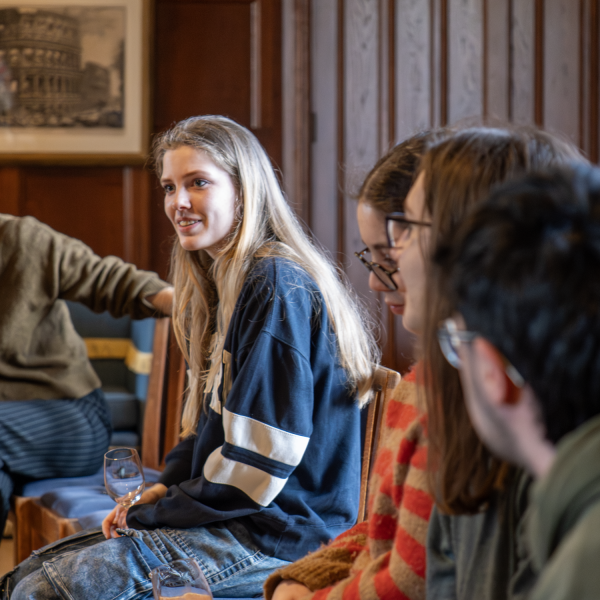
At Girton, we actively encourage all students, regardless of their chosen subject, to engage with Latin through initiatives such as interactive workshops and a range of enrichment activities designed to bring the ancient languages to life. The Bursar has also launched a Prize for Living Latin and Greek, which is a composition prize specifically aimed at encouraging beginners to be creative in ancient languages on a Girton-related prompt. This year the theme was ‘A Room of one’s Own’. We also have a thriving Classics society (Agnata Ramsay Society) who recently held an 'In Conversation' with Professor Mary Beard, for students across the University of Cambridge.
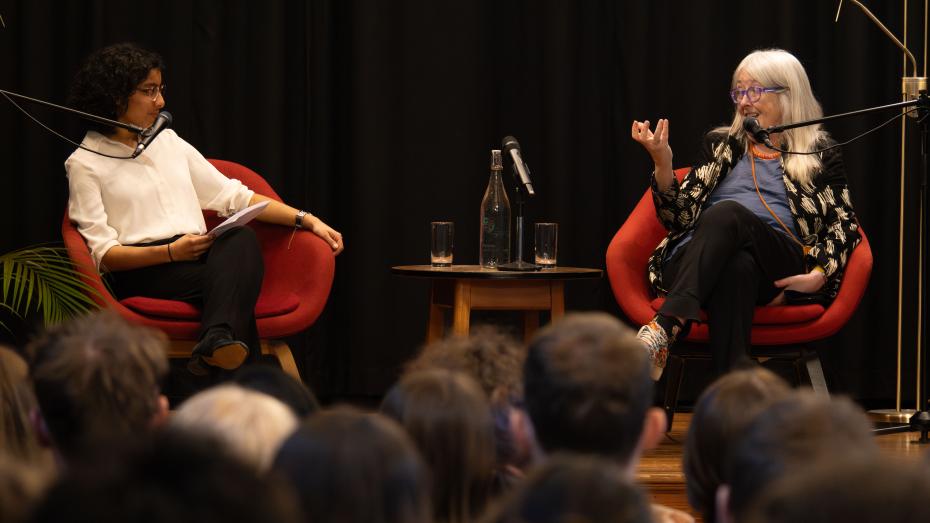
Maria Karinatan in conversation with Professor Mary Beard

On Monday 2 March, Ioan Zalevskyi, a Girtonian who is one of the most capable Latin speakers in Cambridge today and currently teaches Latin at the University Language Centre, held an ‘Active Latin’ event for our students to introduce them to the fun of hearing and speaking Latin through some easy and accessible exercises and games. 

One of our undergraduate Classicists, Jack Hitchcock, recently won the William Browne Medal for a Latin epigram on "Elon Musk". Jack is only the second ever Latin beginner in the University to win this.

Jack's epigram:

Muske, novus Crassus lucris nunc esse requiris?

Gaude! Iam satis est: mens tibi crassa data est.

Translated:

You want to be a new Crassus, Musk, with all your wealth?

Rejoice! No need for more - for crass is your mind already.

We asked Jack for his reflections on winning the Medal:

"The difficulty is to balance "correctness" of metre, the ordering of long and short syllables, and style - in this case, imitation of the often dirty, always political epigrammatist Martial - with the basic requirement of writing a good poem for the theme. In Classics examinations, composition exists only as translation; these competitions are the only time complete creativity is asked for. Here, Latin seemed already a good medium for taking aim at the aspirations of the modern billionaire class - aspirations dependent on an insecurity about the individual's place in history. Putting Crassus into the picture, the wealthiest Roman of the Republic, was a natural choice, and not just because the adjective "crassus" (strong, stout) has a secondary meaning "clumsy/stupid". Crassus' wealth allowed him to interfere in Roman politics at the highest level, backed by a private army that put down Spartacus' slave revolt; but in the end, he overreached, and the Parthians put him to death. Martial, I think, would have liked this formula: (barely) concealing a more political message behind a childish insult."

While many Classics graduates become lawyers, civil servants or heritage specialists, there are also well-trodden paths into finance or computing, and recent alumni have gone into a wide range of areas from international relations to theatre.

Lingua Latina vivit. (Latin lives.)