
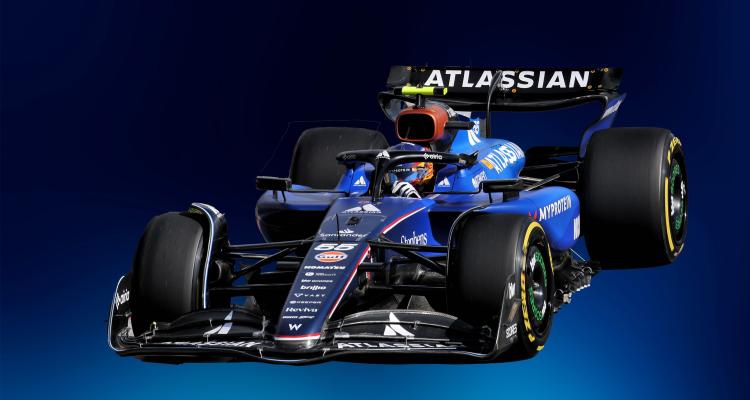
Formula 1 is a huge global sport with a fanbase of 827 million worldwide. It’s also a thrilling combination of human performance, science, data and experimentation, as Atlassian Williams’ Head of Aerodynamics Adam Kenyon explains.
Formula 1 is a sport of milliseconds. A lap time that secures pole position by a nose. A smooth and effective pit stop. A lightning-quick reaction to avoid a hazard or overtake a rival.
Sometimes, that’s down to the drivers: athletes who captivate crowds with their blend of experience, talent, instinct, and fearlessness. But more often, those milliseconds are the result of months and years of work behind the scenes.
As Scottish Formula 1 (F1) legend David Coulthard once said: “The driver is the primary focus of attention, but it’s the thousand-plus team members who create the opportunity to win”.
So, what is it like to be part of one of those teams, united by what Coulthard once called “the relentless pursuit of perfection”?
Adam Kenyon knows. The Girton alumnus (2000 Engineering) has worked in F1 for nearly two decades and has been part of winning teams at Red Bull Racing and Mercedes-AMG Petronas. In April 2024 he was unveiled as Head of Aerodynamics at Atlassian Williams Racing.
“At its core, F1 is a combination of athlete and engineering”, he says. “It’s a balance of theory and testing, as well as a willingness to take risks and give something a go.”
“Innovation is key to being at the front in F1, and you’re not going to do that by playing it safe.”
Kenyon remembers watching F1 on TV with his dad and brother growing up, but being part of the sport wasn’t necessarily a childhood dream. He was interested in sciences at school and found aeroplanes intriguing. So when he discovered aerodynamics, it seemed like a good fit.
He studied Engineering before pursuing a PhD in Aerodynamics. He then took a role at an engineering consultancy but found himself craving something more exhilarating and fast-paced. And, well, it doesn’t get much more fast-paced than where he went next.
“I remember my first day in F1 at Red Bull. Just walking in the door and thinking, ‘wow’.
“One of the amazing things about Cambridge is that you were surrounded by so many talented people, and F1 is similar. You can build off one another and learn from each other.”
“A team doesn’t feel like this vast organisation. Even if you’re just starting, you can feel that sense of camaraderie. You can learn from the most experienced people in the industry.”
Aerodynamics is a key factor in the success of any F1 team. Teams work tirelessly to adjust their designs to optimise how air flows around their car. This can impact how it corners, its speed, and how challenging it is to drive.
“We work on virtually the whole design cycle of components”, says Kenyon. “We’re involved in the Computer Aided Design, the idea generation, the simulation side of things. We test our theories in Computational Fluid Dynamics and select the most promising ideas. Then we manufacture parts and prepare them for testing.
“We have a wind tunnel on site which we use for experimental testing, and we compare our results against what we thought would happen. And then we measure performance on the track and get driver feedback.”
No two weeks are the same in an F1 team. The car that starts the first race of the year is not the same as the one on the grid for the last one. In fact, teams are often juggling two concurrent car programmes: the one they’re using this year, and the one they’re developing to meet next year’s rules and standards.
“We release a car at the start of the year, but we’re constantly upgrading it to stay ahead. You can really see performance changing, as teams bring in upgrades.
“Typically, we’ll be running multiple programmes in the wind tunnel and in Computational Fluid Dynamics. And we’ll be analysing how the car performs on the track on a week-by-week basis. That will include speaking to the drivers about any weaknesses and sensitivities in the car, and how it matches up to the competition.”
Williams is synonymous with F1 legends such as Nigel Mansell, Damon Hill and Jacques Villeneuve, but it’s building a new identity as it looks to return to the front of the grid. It’s a challenge that Kenyon relishes.
“We’re looking to build a culture and develop a tight-knit team from back to front that will help us succeed.
“One thing that’s been really great over the last couple of years is that there’s this focus on long-term sustainable performance. We’re not trying to make quick fixes. We’re empowered to speak up when there’s a better way of doing things, even if it impacts the short term.
“We’re creating a culture where people aren’t afraid of failure, and we’re pushing the boundaries and trying to learn as quickly as we can.”
A lot has changed since Kenyon’s first role in F1. Regulations such as the “Cost Cap” have been brought in, to level the playing field by limiting how much teams can spend on their car. Plans to achieve net zero in F1 by 2030 are ongoing. One big difference he notes is the sheer amount of data that today’s teams work with.
“In my time in F1, the level of detail to which we develop has increased significantly and is supported by vast amounts of data.
“In terms of aerodynamics, as the air flow becomes more complex, the importance of small details increases. I believe that leveraging data science and improving our simulation capabilities are – and will continue to be – key to competitiveness.”
Kenyon is glad to see teams today investing in initiatives and programmes that offer opportunities to talented young people from many different backgrounds. As a team with big ambitions, Williams is offering various routes into the industry on its website at careers.williamsf1.com, including apprenticeships, graduate roles, and the Komatsu Williams Engineering Academy.
What would Kenyon say to someone looking for somewhere to learn, grow and build an exciting career?
“There’s a clarity of purpose in F1 teams that’s very special. I don’t know many other industries that offer anything similar. It’s fast-paced, cutting-edge, and people work hard to solve complex problems to very short timescales.
“It’s got a relentlessness to it that doesn’t suit everyone, and that relentlessness can be addictive. You unlock some performance, and you want to start finding more and more.
“If you want to be in an environment where you’re constantly trying to do things better, Formula 1 is a great place to be.”
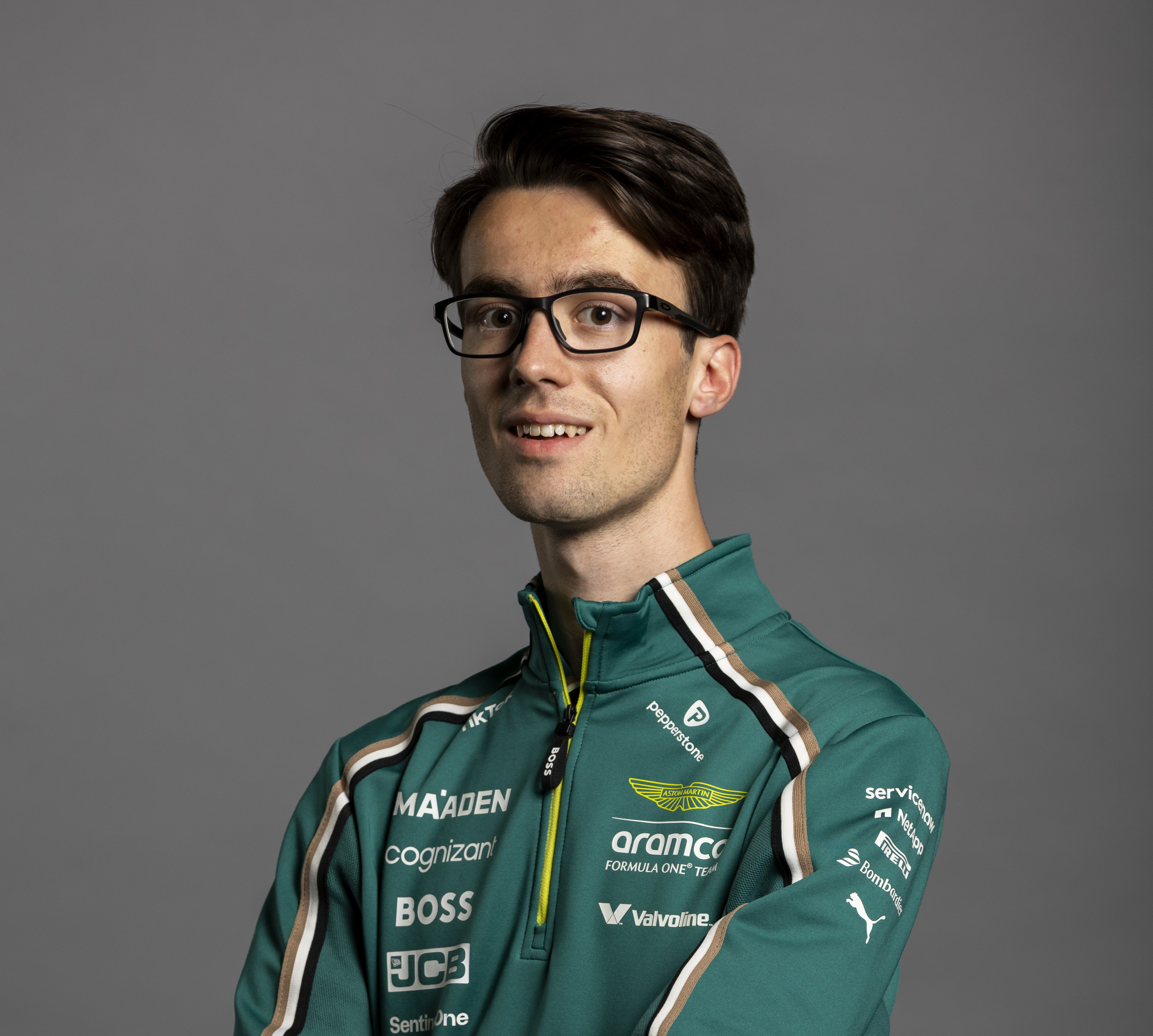 “A lot of things appealed to me”, he says. “The fast-paced environment, the chance to apply mathematics, and the quick feedback, much of it visible each time the cars take to the track.”