Feature

From Girton to Ghana: the travel award behind a once-in-a-lifetime tour

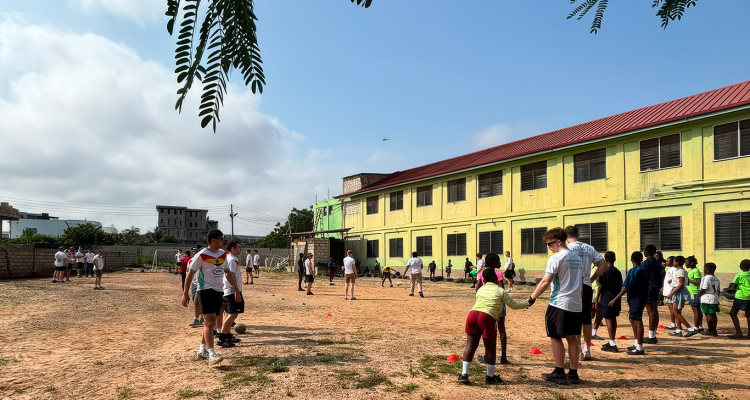
Cambridge students leading an after-school rugby session at Future Leaders School. (Photo credit: Matthew Cormack)

Cambridge students leading an after-school rugby session at Future Leaders School. (Photo credit: Matthew Cormack)

Girton’s Travel Awards help students make the most of opportunities beyond Cambridge, supporting experiences that broaden horizons, build confidence and create lasting connections. Awarded through an annual competition, the grants enable around 35 to 40 undergraduate students each year to travel during the Long Vacation, with trips that do not need to be directly related to academic study. In this article, recent graduate Myles Eckes reflects on how support from the Adela Marion Adam Travel Scholarship made it possible to join Cambridge University Rugby League Football Club on a memorable tour to Ghana.

In the week following my graduation from Girton and the University, I travelled to Ghana with Cambridge University Rugby League Football Club, alongside fellow Girtonians Connor Quigley (2022, Engineering), Jacques Pressley (2022, Engineering), Tom Massingham (2025, Economics), and Owen Hanford-Jackson (2025, MPhil Biological Sciences). The tour followed an invitation from the Rugby League Federation of Ghana, a full member of the International Rugby League, whose national side currently sits 35th in the world rankings.

During our stay in Ghana, we were based in the country’s capital, Accra. On our first day, we were invited to the University of Ghana, where we were given a tour of the university’s grounds. Our visit culminated in a 9s match against the university team, with Cambridge battling unfamiliar hot and humid conditions to secure a 38-18 victory.
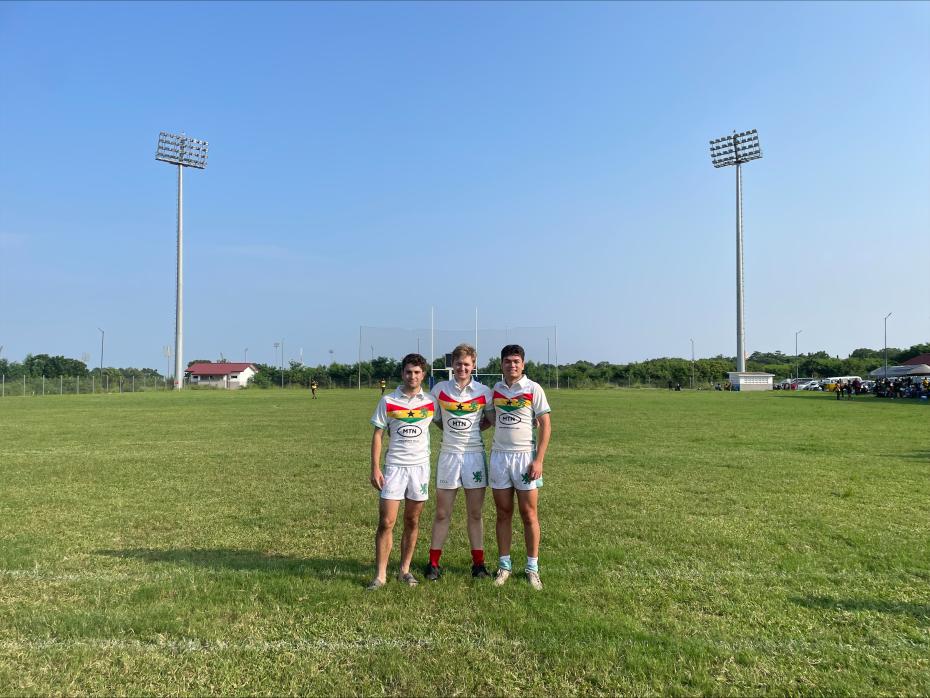
(L-R) Jacques Pressley, Connor Quigley, and Myles Eckes at University of Ghana

Photo (L-R): Jacques Pressley, Connor Quigley, and Myles Eckes at the University of Ghana.

On the following day, we visited two local schools in Accra, the first of which was Englebert School. Here, we ran an introductory rugby session for the children, before spending some time watching the State of Origin match between the New South Wales Blues and the Queensland Maroons. While watching the game, we chatted with the children, who were particularly affable, about everything from what they wanted to do when they were older to whether they preferred Messi or Ronaldo. We also had a short Englebert School vs Cambridge University football match during the half-time break. One student, a 15-year-old boy called Derek, challenged me to a race across the playground, a distance of around 40 metres, which I embarrassingly lost twice quite convincingly. I was duly reminded of this by all who witnessed the race for the remainder of our time at the school. The second school we visited was Future Leaders School, which is run by the Futurestars Charity and has a scholarship programme for students from very poor backgrounds who would likely not be in education otherwise. Here, we ran an after-school rugby session for children aged five to 13. The children at this school were incredibly friendly and welcoming, and despite many of them coming from highly underprivileged backgrounds, they were so gleeful and smiley that many of us from Cambridge agreed they may be the happiest children we had ever met. At the end of our session, we played several games of British Bulldog, which was extremely popular with everyone. After this, we said our goodbyes and left, ending our time at Future Leaders School.

Our second fixture of the trip was against the President’s XIII, the national ‘B’ team. This was a hard-fought, attritional match that really tested the team against strong and competitive opposition, in conditions to which many were still acclimatising. Ultimately, the final score line was 22-10, with Cambridge triumphing over the President’s XIII in a victory that was a testament to the training the team had done throughout the year.

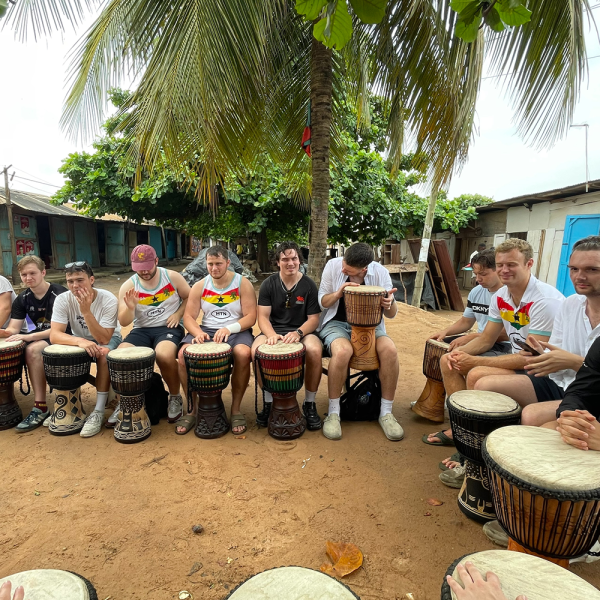
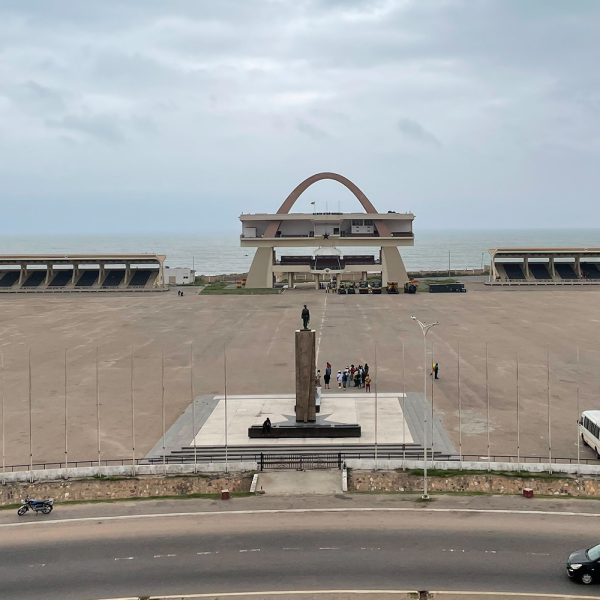
Photos: (Left) Black Star Square. (Right) Drumming lesson in Accra.

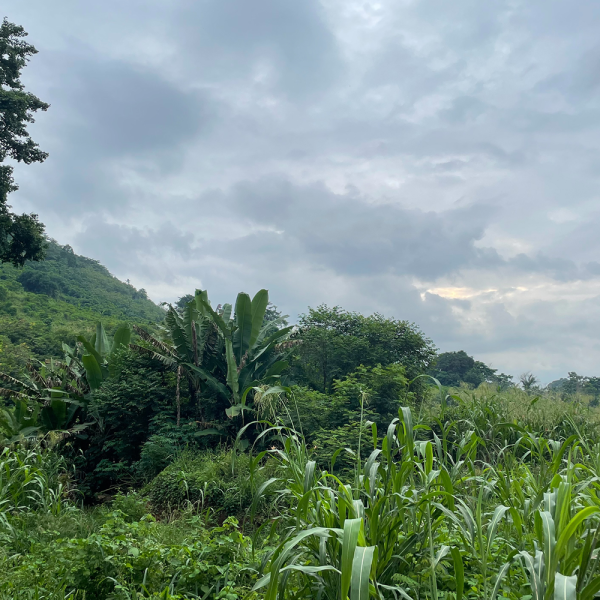
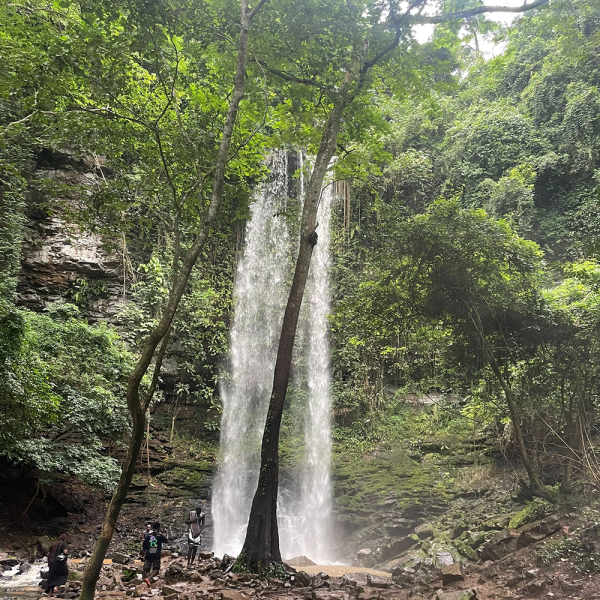
After our match against the President’s XIII, we spent the next two days sightseeing around Accra. Notable places we visited included Black Star Square, Accra Sports Stadium, and the Kwame Nkrumah Memorial. My personal favourite was the historic Jamestown district, which includes an old lighthouse that has stood since 1871. While in the district, we were given a drumming lesson and were able to browse the local market, which was filled with an array of Ghanaian clothes, jewellery, and souvenirs. In addition to sightseeing, we also ventured out of Accra to see the picturesque Asenema Waterfalls, where quite a few of us went for a swim. Having spent all of our time in Accra beforehand, it was lovely to see a different, more rural side of Ghana.

Photos: (Left) A view of the hills near Somanya. (Right) Asenema Waterfalls.

On our penultimate day in Ghana, we had our final game, playing against the Ghana Leopards, the national team. Having already played two fixtures during the week, the boys’ bodies were feeling sore and legs were feeling heavy. However, the team managed to dig deep, with the final score 12-4 to Cambridge, ending the tour unbeaten in Ghana. It was a particularly proud achievement for all the boys involved.

Following an incredible but exhausting week in Ghana, and before heading to the airport, we visited the residence of the British High Commissioner to Ghana, Christian Rogg (who is unfortunately an Oxon), at his invitation. After socialising and enjoying much of what was on offer, we sadly departed for the airport, bringing our time in Ghana to a close.

As a final point, I would like to make clear that without the funding I received from Girton College through the Adela Marion Adam Travel Scholarship, I would not have been able to go on this trip or have this once-in-a-lifetime opportunity. I am immensely grateful, and would like to formally thank Girton College and all of its benefactors, as their funding provides students with incredible opportunities that may not otherwise be possible.

Written by Myles Eckes.