
Dr Shyane Siriwardena
Bye-Fellow, Director of Studies

Philosophy examines the most general questions about ourselves and our world. It is a discipline that encourages logical rigour and intellectual creativity. After spending first year learning the fundaments of the subject, students are afforded the opportunity to explore a wide range of philosophical topics, from environmental ethics to the principles of logic. Girton’s philosophy teachers aim to support students as they navigate through this fascinating and challenging subject. When you join the Philosophy community at Girton, you join a small but enthusiastic group of students who enjoy lively discussions of some of our biggest questions.
Philosophy has long been a part of the rich tapestry of the college. Girton has a longstanding interest in, and firm commitment to, the discipline. Two of the College’s former Mistresses were philosophers (Mary Warnock and EEC Jones). Today, the College has a Director of Studies and Bye-Fellow in Philosophy.
In studying the Cambridge Philosophy course you will develop your reasoning skills, learn to think clearly about abstract problems and you will be introduced to philosophical literature and to current philosophical concepts and debates. Logic, Metaphysics and Epistemology are core elements, but in addition there is a wide choice of optional topics in second and especially third years, including papers borrowed from Divinity (Metaphysics), Classics (Greek & Roman Philosophy) or Natural Sciences (Experimental Psychology), or Law (Jurisprudence).
Apart for the option of continuing in academia, common destinations are computing, finance and law (after a Law Conversion course). Others follow traditional routes such as journalism and civil service.
David
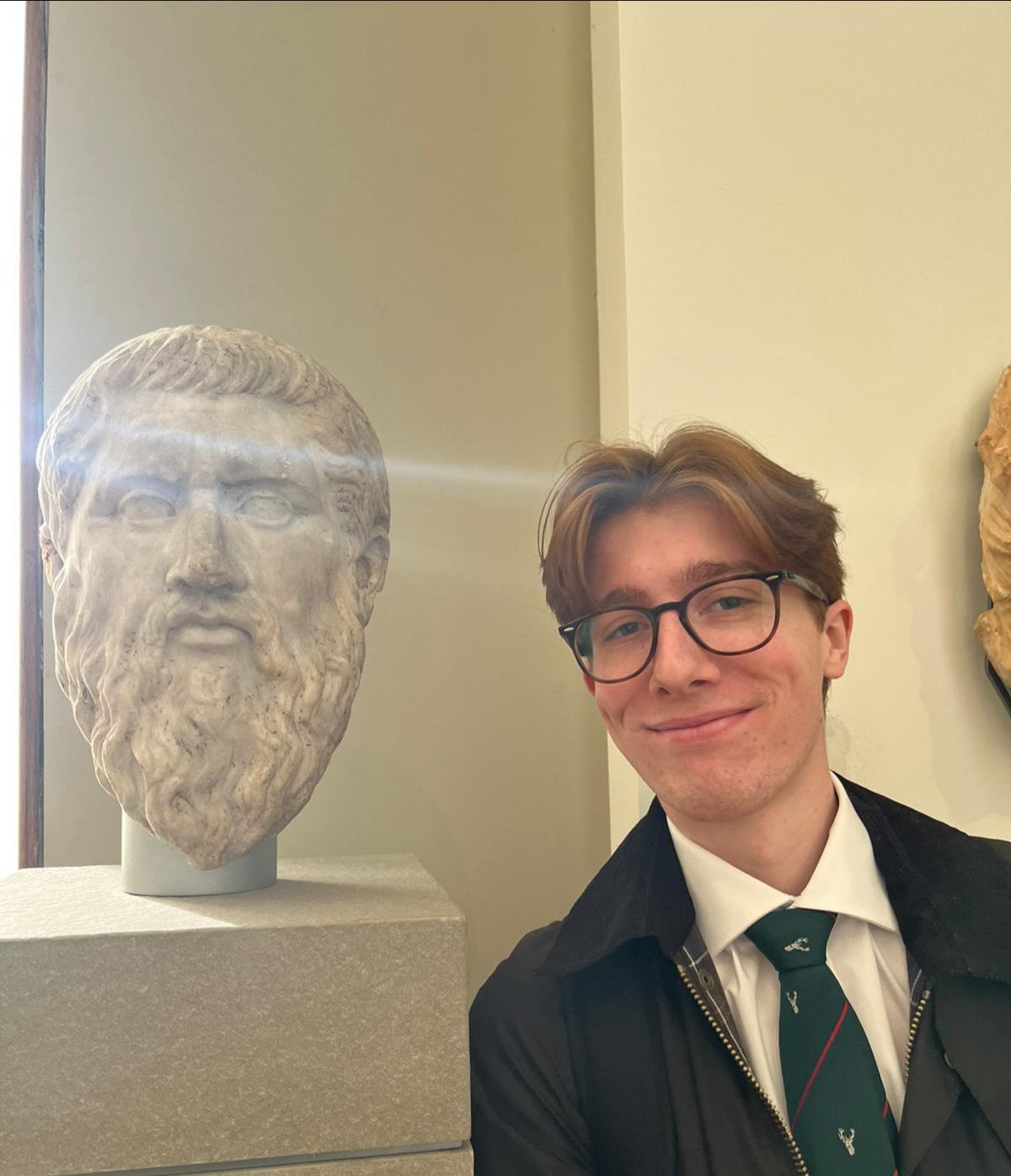
Why did you choose Philosophy (at Girton)?
Doing Philosophy and Maths at school I knew I wanted to keep both subjects going in at least some sense, and Philosophy at Cambridge seemed perfect for that!
What is the best thing about doing Philosophy at Girton?
Girton, beyond being incredibly lovely and welcoming to all, is the perfect place to study Philosophy! Being a little outside of central Cambridge, Girton has a quieter atmosphere and far larger grounds than many other colleges, giving philosophers all the space they could want to walk and think – or equally to take a relaxing walk, not think, and instead just enjoy nature for a while.
What’s your favourite place in college?
I particularly love walking round the orchard and the pond – they are so peaceful and seeing a heron or some ducklings always makes my day!
What makes the Cambridge Philosophy course stand out?
Cambridge stands out for its rich history in Philosophy, playing a key role in the development of the Analytic School – and the course reflects this with many analytic and logic-based papers you can take throughout the degree, taught by some of the biggest contemporary names in the field.
Do you know which papers you’ll be taking next year?
I’m moving into my Third Year soon, and I’ll be doing a Dissertation and definitely taking the available Logic papers. I’ll also borrow a paper from the Classics Faculty (as I’ve done this year too) focusing on Plato.